

View Dr. Courtney’s Books
below:

Feminist Perspectives on Women, Money
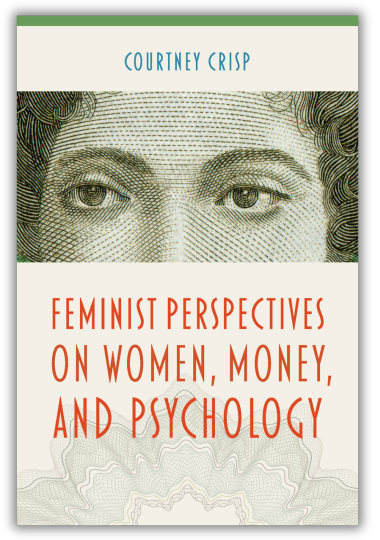
Feminist Perspectives on Women, Money, and Psychology lays the groundwork for an integrative and well-rounded understanding of how history and
oppression have shaped women’s financial experiences, and offers a path forward for scholars, clinicians, and others seeking more informed, equitable approaches to money.
The book presents an expansive view of various aspects of the intersection of women, money, and psychology, aiming to be useful both personally and professionally. In doing so, it addresses a critical gap in scholarship, exploring how historical and systemic forces have influenced women’s relationships with money. Each chapter focuses on a different theme, including historical background, relationships, work, motherhood, identity, clinical practice, and action and advocacy. Drawing from feminist psychology, developmental psychology, and sociology, it provides an intersectional analysis that highlights the unique experiences of women of color and LGBTQIA+ women.
A lifespan perspective offers insight into how financial attitudes and challenges evolve from childhood through older adulthood.
Use Discount Code: FLYER20

How Kingston Got His Stripes

"How Kingston Got His Stripes" is a children’s book about bravery, differences, and rare disease. Meet Kingston, a fun-loving five-year-old who adores dancing, singing, and playing with his dog. Kingston is just like any other kid, except he also lives with a rare disease called MCADD.
In "How Kingston Got His Stripes," young readers join Kingston as he shares what it’s like to grow up with a medical condition that makes him a little different - but also very special. With warmth, honesty, and playful illustrations, Kingston shows that challenges don’t define us. Instead, they give us our “stripes,” the unique qualities that make us who we are.
MCADD (medium-chain acyl-CoA dehydrogenase deficiency) is a rare genetic condition where a person has problems breaking down fat to use as an energy source.. This means that someone with MCADD can become very ill if their body's energy demands exceed their energy intake, such as during infections or vomiting illnesses when they're unable to eat.
Problems occur because fat is only partially broken down, which leads to a lack of energy and a build-up of harmful substances in the body. MCADD is a lifelong condition that's present from birth. It is usually picked up using the newborn blood spot test.
MCADD is a potentially serious condition that can be life-threatening if not recognized quickly and treated appropriately. However, most cases are picked up soon after birth and can be managed quite easily. With proper care, there's no reason why someone with MCADD cannot live a normal, healthy and active life.